Self-booking
Visitors see open dates as opportunities, choose how they would like to help, and preview what the household will see.
A family network for sharing dementia caregiving
Open interactive prototype ↗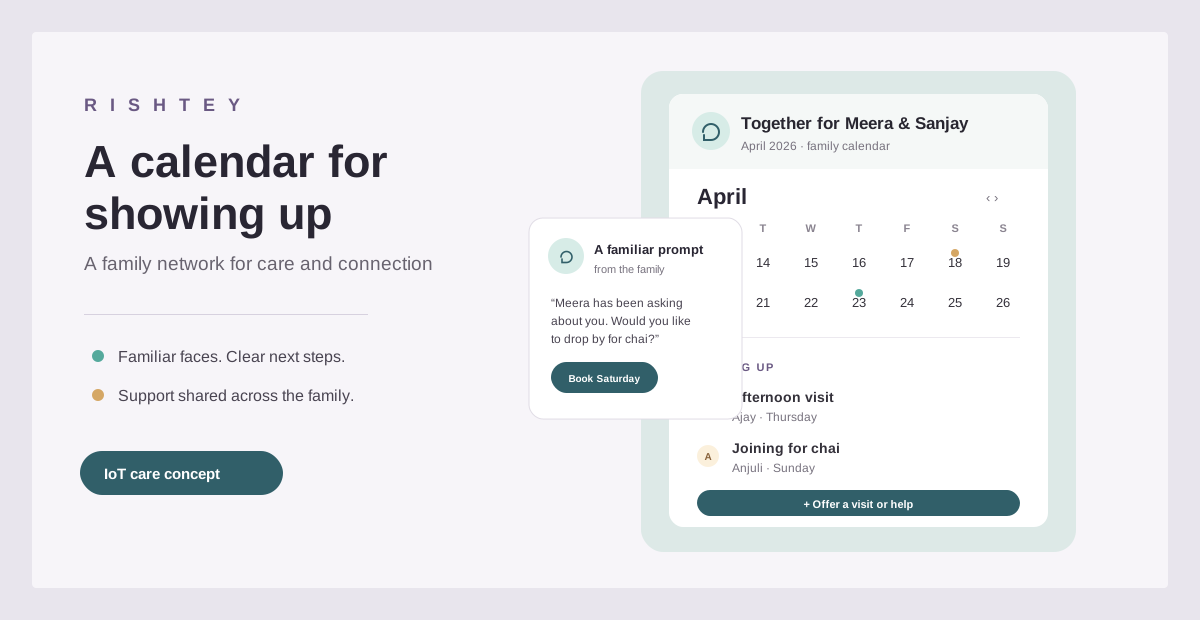
Rishtey pairs a companion app with a tactile shared calendar to help family caregivers coordinate visits and ask their network for practical support.
It makes requests easier for relatives to respond to while helping a person in the early stages of dementia stay connected with loved ones and know who is coming.
Caregiving can leave one family member carrying most of the coordination and feeling uncomfortable asking others to help. Friends and relatives may want to contribute but need clear, considerate ways to choose a time or offer support. Rishtey aims to make those requests easier to schedule and respond to, while keeping the person with dementia informed and involved.
The companion app is the caregiver’s main tool for coordinating support. They can schedule visits, invite people in their network to choose an open time, or send gentle prompts when help is needed. A tactile shared calendar makes plans visible at home, helping the person in the early stages of dementia know who is coming and take part in time together.
Visitors see open dates as opportunities, choose how they would like to help, and preview what the household will see.
The caregiver can invite a relative to a specific visit or task, turning a broad need into a clear, manageable request.
When the calendar has a gap, the app can offer a gentle prompt to someone in the network, with per-person cooldowns to avoid repeated pressure.
These screens show the caregiver’s path from spotting a gap to inviting help, while keeping the person at home included in the plan.
The calendar and gap analysis turn a vague feeling that “more help is needed” into a clear stretch of time. The caregiver can choose a specific invitation instead of carrying every follow-up themselves.
The prototype suggests a small group based on visit patterns, then shows who will be contacted and the message they’ll receive. Framing the note as a personal invitation keeps the caregiver’s coordination private and makes the next step easy to accept or decline.
The wall-calendar view pairs a large starting action with familiar people and a few clear ways to connect. It keeps the person living with dementia involved, while the companion app carries the caregiver’s scheduling work.